


Shopify vs. WooCommerce: Which Is Better for Your Online Store?

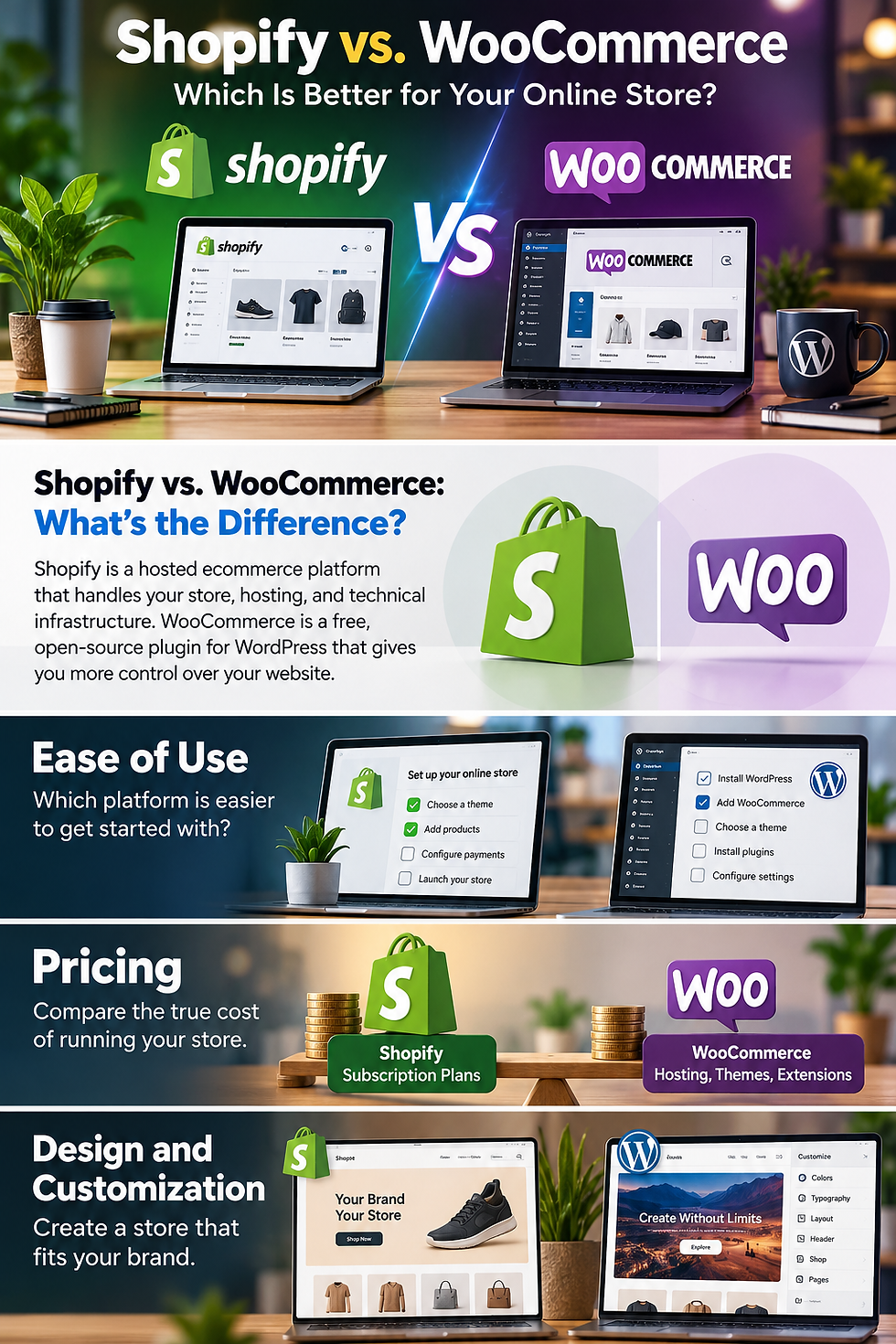
Choosing the right ecommerce platform can make a big difference when you're starting an online business. Shopify and WooCommerce are two popular options, but they work in different ways. One offers a more managed solution, while the other gives you greater control over a WordPress website.
So, which is better: Shopify or WooCommerce? The answer depends on your budget, technical experience, and how much control you want over your store.
In this guide, we'll compare Shopify vs. WooCommerce, looking at pricing, ease of use, design, payment options, customization, and the main advantages and disadvantages of each platform.
Shopify vs. WooCommerce: What's the Difference?

Shopify is a hosted ecommerce platform that brings together your online store, product management, checkout, hosting, and other selling tools in one place. You pay for a subscription, and Shopify handles much of the technical infrastructure.
WooCommerce works differently. It's a free, open-source ecommerce plugin for WordPress that turns a WordPress website into an online store. You choose your hosting provider, manage your website, and decide which themes, plugins, and extensions to use.
The main difference comes down to convenience versus control. Shopify is designed to simplify store management, while WooCommerce gives you more freedom to customize your website and choose how it operates.
1. Ease of Use

Shopify
Shopify is a good option for beginners who want to build an online store without dealing with much technical setup. Its dashboard brings products, orders, payments, and store management together in one place.
You can choose a theme, add products, customize your storefront, and configure your checkout without needing to build the entire website from scratch. Hosting is included, so you don't need to arrange a separate hosting service.
Shopify still takes time to learn, especially when setting up shipping, taxes, payment methods, and marketing tools. However, its managed approach makes it easier to get started without handling every technical detail yourself.
WooCommerce
WooCommerce gives you more responsibility from the beginning. You'll need a WordPress website, hosting, and a suitable theme before configuring your store.
The WordPress dashboard is flexible, but beginners may need time to understand plugins, updates, backups, security, and website settings. The experience becomes easier with practice, and many hosting providers offer WordPress installation tools to simplify the initial setup.
Winner: Shopify for simplicity and convenience. WooCommerce is worth considering if you're comfortable learning WordPress or already manage a WordPress website.
2. Shopify vs. WooCommerce Pricing

Cost is an important consideration when choosing an ecommerce platform. However, comparing subscription prices alone doesn't always show how much a store will cost to operate.
Shopify pricing
Shopify uses subscription plans. Its US pricing page lists the Basic plan at $29 per month when billed annually, with higher-priced plans available for businesses that need additional features.
Hosting and an SSL certificate are included, which makes the main platform cost relatively straightforward to understand. You may still pay extra for premium themes, paid apps, and payment processing.
Prices and available features can vary by country, billing frequency, and promotion. Check the official Shopify pricing page before choosing a plan.
WooCommerce pricing
WooCommerce itself is free to download and use, but running a store isn't necessarily free. You'll generally need web hosting and a domain name, and you may choose to pay for a premium theme, extensions, backups, or security services.
The total cost depends on the hosting provider and the tools you choose. A small store using free extensions may have relatively low expenses, while a more complex store can require a larger budget for development and maintenance.
Which is cheaper?
WooCommerce can be an economical option if you already have WordPress hosting and can manage the website yourself. Shopify may offer more predictable costs for people who prefer hosting and core store infrastructure bundled into one subscription.
To compare them fairly, consider the complete cost of running your store, including payment processing, paid extensions, maintenance, and your own time.
Winner: It depends on your setup. WooCommerce gives you more control over individual expenses, while Shopify offers a more bundled approach.
3. Design and Customization

Shopify
Shopify provides themes that let you create a professional-looking storefront without starting from a blank page. You can customize layouts, colors, typography, product pages, and other elements using the available theme settings.
Apps and integrations can extend the store with additional features. More advanced changes may require familiarity with Shopify's theme language or help from a developer.
WooCommerce
WooCommerce benefits from the flexibility of WordPress. You can choose from a wide range of themes, page builders, plugins, and custom development options.
This makes it attractive to store owners who want more control over their website's structure and functionality. The trade-off is that greater flexibility can also mean more setup, more compatibility decisions, and additional maintenance.
Winner: WooCommerce for extensive customization. Shopify is a strong choice for store owners who want design flexibility without managing as many technical details.
4. Payment Options and Checkout

A smooth checkout is essential because customers need to pay easily and trust the buying process.
Shopify
Shopify supports its own payment solution in eligible countries, along with supported third-party payment providers. The available options and fees depend on your location, plan, and payment setup.
If you use an external payment provider, additional Shopify transaction fees may apply depending on your plan and circumstances. Check the current terms carefully before deciding how to accept payments.
WooCommerce
WooCommerce supports a range of payment gateways through its extensions, including WooPayments where available. You can choose a provider that suits your business and target market.
Payment processing fees still apply, and some providers or extensions may have their own costs. You may also need to configure additional settings or extensions to achieve the checkout experience you want.
Winner: Neither platform wins for every business. Compare the payment providers available in your country, their fees, supported currencies, and payout arrangements before choosing.
5. Apps, Plugins, and Integrations

Both platforms let you extend your store beyond their basic features, but they approach integrations differently.
Shopify has an app ecosystem covering marketing, customer reviews, shipping, inventory, analytics, and customer support. Many integrations can be installed without managing a separate WordPress plugin system.
WooCommerce uses the WordPress plugin ecosystem alongside WooCommerce extensions. This gives store owners considerable flexibility, including the ability to combine ecommerce features with blogging, membership tools, and other WordPress functionality.
The cost of either platform can rise as you add paid tools. With WooCommerce, you should also check that your plugins work together and remain compatible with your WordPress setup. With Shopify, check whether an app requires a recurring subscription or has usage-based charges.
Winner: Both offer extensive options. Shopify suits people who prefer a managed app ecosystem, while WooCommerce appeals to users who want to build a more customized WordPress setup.
6. Security and Maintenance

Security is another important difference between the platforms.
Shopify manages much of the underlying hosting infrastructure and platform maintenance. You still need to protect your account, manage staff permissions, choose trustworthy apps, and follow good security practices, but you don't need to maintain a separate WordPress installation.
With WooCommerce, your responsibilities depend partly on your hosting provider and chosen tools. You'll need to keep WordPress, WooCommerce, themes, and plugins updated, and make sure backups and appropriate security measures are in place.
Managed WordPress hosting can simplify some of this work, but it doesn't remove every maintenance responsibility.
Winner: Shopify for people who want fewer technical tasks. WooCommerce is suitable for store owners who are comfortable managing a WordPress website or have reliable technical support.
7. SEO and Content Marketing

Both Shopify and WooCommerce can support an effective SEO strategy. Neither platform automatically guarantees higher rankings or more sales.
Shopify includes tools for managing important SEO elements, such as page titles, meta descriptions, URLs, a9nd image alt text. You can also publish blog content and extend your store with marketing apps.
WooCommerce works within WordPress, which is widely used for content publishing. Its themes and plugins provide options for managing metadata, structured content, internal links, and other SEO tasks.
With either platform, results depend on the quality of your content, site structure, technical performance, product pages, and the search intent you're targeting.
Winner: Both are capable. WooCommerce may appeal to businesses that want deep integration between a WordPress blog and an online store, while Shopify keeps ecommerce and content tools together in a managed platform.
Shopify vs. WooCommerce: Quick Comparison
Feature | Shopify | WooCommerce |
Platform cost | Paid subscription | Free core plugin; other costs apply |
Hosting | Included | Arranged separately |
Ease of use | Generally simpler for beginners | Requires WordPress setup and management |
Customization | Themes, apps, and development | Broad WordPress and plugin flexibility |
Maintenance | Much of the platform is managed | More responsibility for the site owner |
Payment options | Shopify Payments where available and supported third parties | Supported payment gateways and extensions |
SEO | Built-in controls and apps | WordPress SEO tools and plugins |
Best suited to | People who value convenience | People who value control and flexibility |
Shopify may be the better fit if you:
Want to launch a store without managing separate hosting.
Prefer having products, orders, and store management in one dashboard.
Don't want to handle routine WordPress maintenance.
Are willing to pay a subscription for a more managed platform.
Want to focus on products, customers, and marketing rather than technical setup.
If Shopify is on your shortlist, read our detailed [Shopify Review: Is It the Right Platform to Build Your Online Store?] to explore its features, pricing, advantages, and disadvantages in more depth.
Who Should Choose WooCommerce?
WooCommerce may be the better fit if you:
Already have a WordPress website.
Want more direct control over your website and hosting.
Prefer choosing your own themes, plugins, and service providers.
Need a close connection between your blog and online store.
Feel comfortable managing updates, backups, security, or working with a developer.
WooCommerce isn't automatically cheaper or easier, but its flexibility can be valuable for businesses with specific requirements.
Shopify vs. WooCommerce: Which Is Better?
There isn't one platform that's best for everyone.
Shopify is a practical choice for entrepreneurs who want a managed ecommerce platform with hosting and core store tools included. It reduces the amount of technical infrastructure you need to arrange yourself, although subscription and app costs should still be considered.
WooCommerce is a strong alternative for businesses that value the flexibility of WordPress and want greater control over their website. Its core plugin is free, but hosting, extensions, maintenance, and development can add to the total cost.
Before making your decision, list the features your store actually needs, compare the complete costs, and consider how much time you're willing to spend managing the technology.
The best platform is the one that fits your budget, skills, and business plans—not simply the one with the lowest starting price.
Affiliate disclosure: This article may contain affiliate links. If you sign up through qualifying links, we may earn a commission at no additional cost to you.

Comments